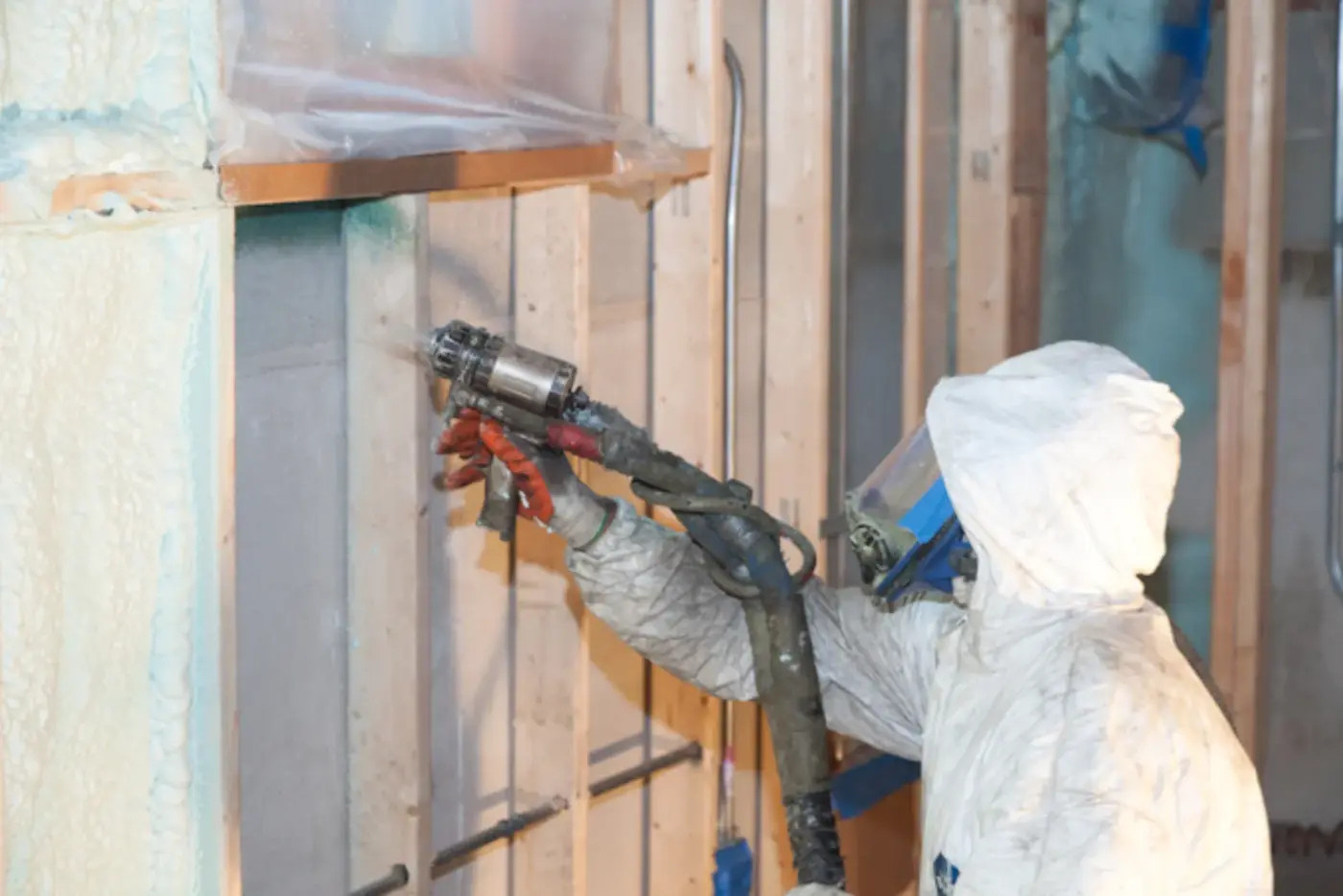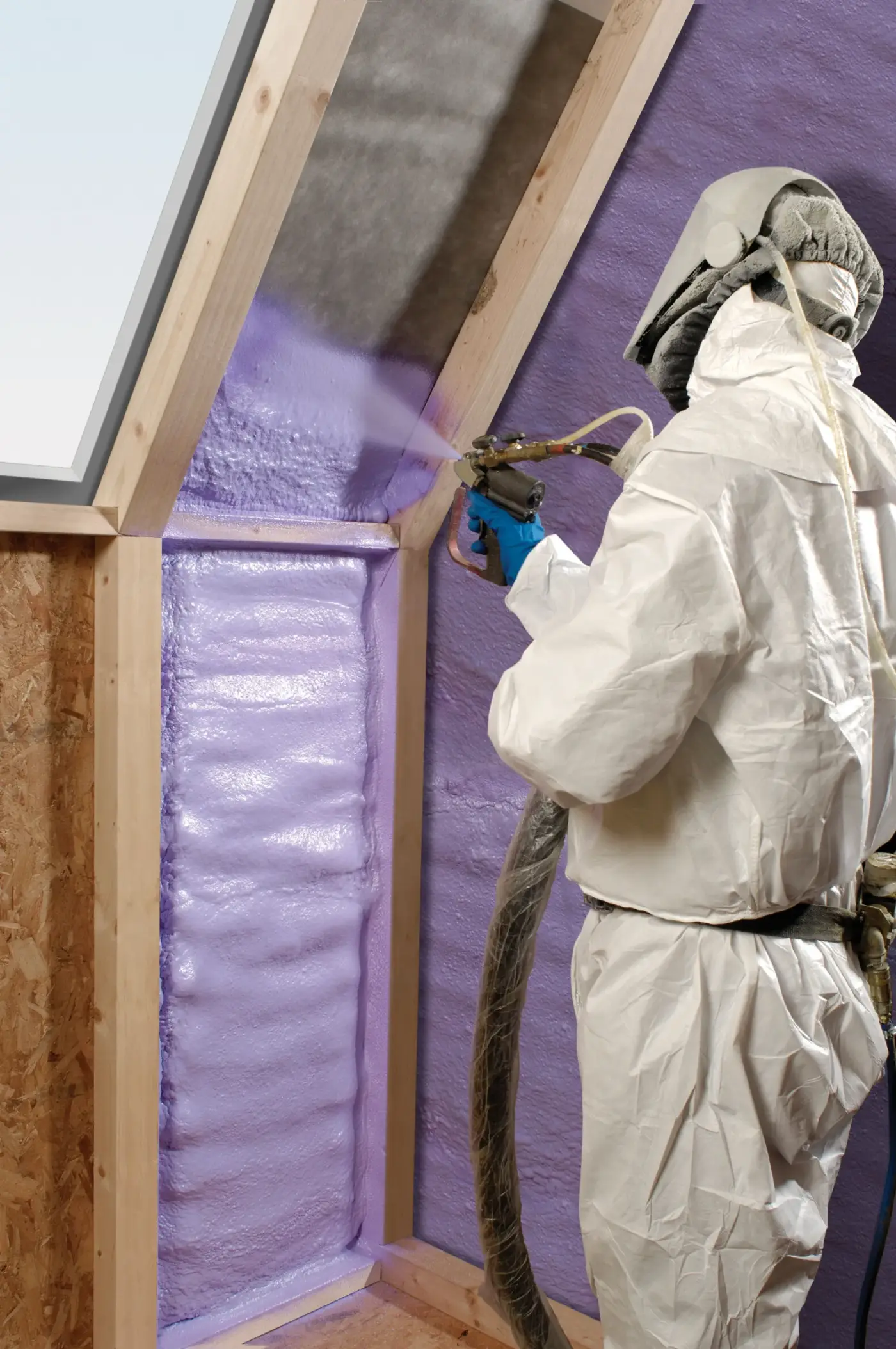
The two spray foams solve different problems. Open-cell is soft, light, and cheaper per inch at roughly R-3.7; closed-cell is dense, rigid, and moisture-resistant at roughly R-6.5 to R-7 per inch. In a Las Vegas summer the question is really: which one, where, against 110-degree air and a 150-degree attic?
What each foam actually is
Open-cell cures into a spongy fill that expands generously — great for filling irregular framing and quieting walls, less R per inch, and it breathes water vapor. Closed-cell cures hard, adds structural stiffness, blocks vapor, and packs the most R into the least depth.
Desert assignments
Vented attics get open-cell at the roofline or a full unvented conversion depending on ductwork; garages and metal buildings — Vegas specialties — want closed-cell for its rigidity and heat resistance on thin-framed walls. Block walls furred out shallow also favor closed-cell because depth is scarce.
Moisture drives fewer choices here than in humid states, which frees budget logic: open-cell where depth is available, closed-cell where space is tight or the substrate is metal.
The attic is the whole ballgame
Vegas attics hit 150-plus in summer, and ducts running through them lose cooling by the percent. Foam at the roof deck pulls the attic into the envelope — dropping attic temps by 50-plus degrees and putting the ductwork inside the cooled zone. It is the single highest-impact retrofit this market has.
Choosing without over-buying
Match foam to assignment, not to a universal upgrade pitch: open-cell roof deck plus air sealing handles most tract homes; closed-cell earns its premium on garages, metal, and shallow cavities. A bid that specifies foam type, thickness, and target R per area is a bid you can compare.
The desert bottom line
Roofline first, with whichever foam the depth allows; closed-cell for metal, garages, and shallow cavities. Ask every bidder for type, inches, and target R by zone — in this climate the attic spec is the whole scoreboard.
A Vegas house with its ducts inside a foamed envelope simply plays a different summer than its neighbors. That is the upgrade being priced.